With five kids running around my house, my brain has been fried, baked, and occasionally pureed, but learning about the gut-brain axis and how fermented foods for mental health can support recovery completely changed how I fed my exhausted postpartum body.
Let us set the scene: I was nursing baby number four at 3:00 AM, wearing a stained nursing tank, staring blankly at the wall, and wondering if my brain had permanently dissolved into amniotic fluid. Between the sleep deprivation, the hormonal freefall after birth, and the sheer chaos of managing a household with multiple tiny humans, I felt frayed at the edges. I figured feeling anxious, teary, and bone-tired was just the mandatory uniform of motherhood.
Then I stumbled into the fascinating, slightly mind-bending world of nutritional psychiatry. Did you know that a staggering portion of the body's serotonin—the neurotransmitter heavily responsible for mood regulation, sleep, and happiness—is actually produced in the gastrointestinal tract? Scientists call this two-way communication superhighway the gut-brain axis. Through the vagus nerve, our gut microbes chat directly with our central nervous system. When you grow a human, pregnancy and birth can profoundly shift your microbiome and deplete your nutrient stores. No wonder so many of us new moms feel like our emotional wiring is hanging by a single frayed thread.
If you want to go deeper on the science, I keep a plain-English library here: Best Foods and Vitamin D.
When we talk about nourishing our minds post-baby, we usually hear about salmon, leafy greens, and dark chocolate (all of which I deeply endorse). But adding probiotic-rich options like fermented foods for mental health into your daily routine is like sending a reinforcement army of friendly micro-organisms straight to your digestive tract. These live beneficial bacteria do more than just help digestion; they actively produce and modulate neurotransmitters, dampen systemic inflammation that can cross the blood-brain barrier and worsen anxiety, and help repair intestinal permeability.
In nutritional studies, diets rich in fermented dairy, live kraut, and kimchi have been linked to lower levels of psychological distress. For a postpartum mother, this is revolutionary. We do not need complicated, time-consuming wellness protocols that make us feel like failures when we cannot complete them. We just need small, bioavailable interventions that fit into a life already overflowing with laundry baskets and toddler tantrums.
From Emily's kitchen: If your family isn't ready for tangy sauerkraut, start by stirring a tablespoon of plain whole-milk kefir or Greek yogurt into your morning oatmeal with a drizzle of honey. It's an effortless way to sneak live cultures into breakfast without the tang!
Now, I love a good kitchen project as much as the next chef, but when you have five kids underfoot, you are not spending three weeks burping ceramic crocks in a cool dark cellar. We need low-effort, high-reward nutrition. Enter store-bought or ridiculously simple homemade ferments.
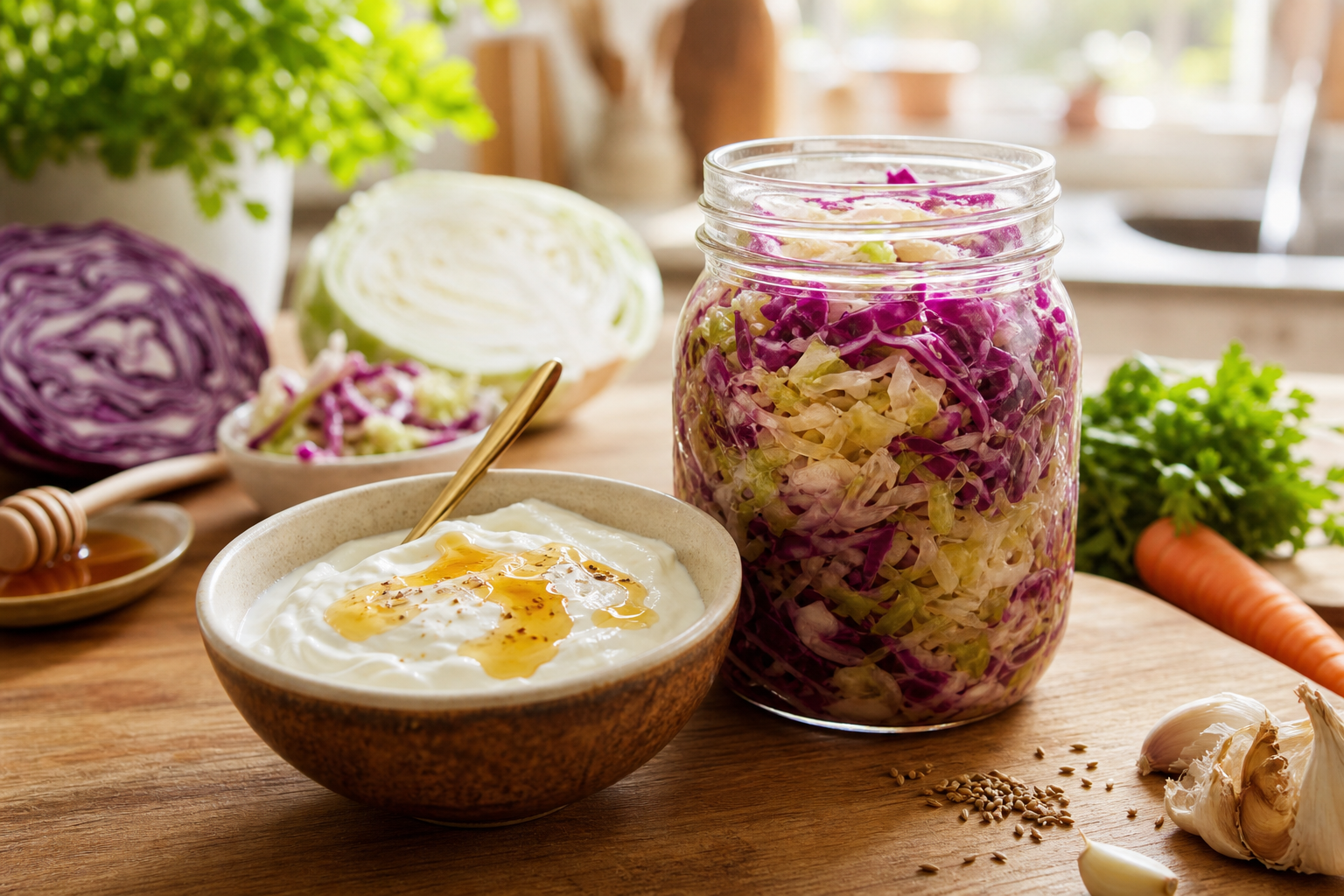
Kefir is one of my absolute favorites. It is essentially a drinkable, tart yogurt packed with diverse strains of beneficial bacteria and yeasts. Pour a splash over some berries, blend it into a quick morning smoothie, or eat a bowl of whole-milk Greek yogurt topped with honey. And when it comes to vegetables, raw unpasteurized sauerkraut is a tangy powerhouse. You do not need fancy equipment to reap the benefits. A single forkful added to your scrambled eggs at lunch or tossed onto a cozy bowl of grain and roasted veggies gives your gut a vibrant, living boost of beneficial flora.
Before we wrap up, mama-to-mama, I need to say something very important. Food is powerful, beautiful medicine, and caring for your gut is a profound act of self-love. But a jar of kraut or a cup of kefir is not a magic wand, and it is certainly not a replacement for professional medical care. If you are experiencing persistent sadness, debilitating anxiety, intrusive thoughts, or a sense of hopelessness that won't lift, please please talk to your OB-GYN, midwife, or a postpartum therapist. Postpartum mood disorders are real, common, and entirely treatable. You do not have to white-knuckle your way through motherhood alone.
A foolproof, gut-loving raw sauerkraut that takes minutes to prep and brings bright crunch and live probiotics to every postpartum meal.
This is exactly the kind of warm, mood-supporting cooking I built into The Sitting Month recovery course — done-for-you meal plans for the fourth trimester, so a new mom never has to figure it out at 3am.
Yes! Traditional ferments like kefir, yogurt, and raw kraut contain live, friendly bacteria that help populate your gut microbiome. However, if you are new to ferments, start with just one tablespoon a day so your digestive system can adjust without bloating or cramping.
While nourishing your gut with probiotic foods is a wonderful way to support your mood and recovery, it is not a cure-all. If you are experiencing persistent sadness, anxiety, intrusive thoughts, or overwhelming fatigue after birth, please reach out to a healthcare provider or a postpartum mental health specialist. You deserve professional support, and asking for help is an act of fierce love.
Store-bought options are fantastic when you are knee-deep in diapers and survival mode. Just look for labels that say 'contains live and active cultures' and check the ingredient list to ensure there's no added sugar or artificial preservatives. Raw, unpasteurized kraut in the refrigerated section (not the shelf-stable canned aisle) is where the magic lives.

Emily is a chef, mother of five and postpartum-recovery educator who revives the 2,000-year-old zuo yuezi ("sitting month") tradition for modern mothers. Her signature, food-first method helps women rebuild after birth and ease postpartum depression — and she now certifies doulas and midwives to cook it for their own clients.
The Sitting Month recovery course delivers these mood-supporting foods in warm, done-for-you meal plans built for the postpartum brain.
See the recovery course