If you have ever put your car keys in the refrigerator or stood in the pantry crying over a rogue goldfish cracker, hear this: you are not losing your mind, but your neurotransmitters might just be begging for b12 and folate for mood regulation and energy.
Let us be completely honest for a second. When you are navigating the trenches of motherhood—especially when you are outnumbered by five children under your roof—everyone tells you to expect mom brain. They laugh and tell you stories about putting the phone in the freezer or forgetting why you walked into the nursery. You nod along, sip your lukewarm coffee for the fourth time that morning, and accept that your brain has turned to mush because you grew human beings and now you wake up every two hours to feed them.
But there comes a point where the brain fog stops being a funny meme and starts feeling terrifying. I remember sitting at my kitchen island after baby number five, staring blankly at a pile of unmatched socks, feeling a heavy, suffocating grey fog pressing down on my chest. I wasn't just tired; I was hollowed out. My nervous system felt like frayed electrical wire. I couldn't string two coherent sentences together, and my patience was thinner than single-ply nursery toilet paper.
It took months of research, talking with functional practitioners, and diving deep into nutritional psychiatry for me to realize something liberating: I wasn't failing at motherhood. My cellular batteries were completely drained. Specifically, my body had been thoroughly depleted of the critical nutrients needed to manufacture neurotransmitters. Once I started intentionally prioritizing b12 and folate for mood support, the lights in my house finally turned back on.
If you want to go deeper on the science, I keep a plain-English library here: Iron, B12 & Folate and Vitamin D.
We talk endlessly about sleep during the postpartum period—or rather, the total lack of it—but we rarely talk about the biochemical toll that pregnancy and lactation take on our nutrient stores. Growing a baby is a biological masterclass in redistribution; your body will generously hand over its own ferritin, B vitamins, and folate reserves to build your baby's nervous system, leaving your own tank completely empty.
In nutritional psychiatry, we look closely at a process called methylation. Think of methylation as your body's bustling biochemical highway system. It is responsible for repairing DNA, detoxifying hormones, and—crucially—synthesizing serotonin, dopamine, and norepinephrine. Without adequate vitamin B12 and folate, that biochemical highway comes to a grinding halt. You experience sluggish neurotransmitter production, which directly manifests as flat moods, crushing fatigue, irritability, and that heavy, sticky brain fog that makes deciding what to make for dinner feel like an insurmountable calculus problem.
When you are breastfeeding, your body continues to prioritize milk production over your own neurological health. If your intake of B-complex vitamins isn't keeping pace with your output, your mood and cognitive stamina will take the hit. That is why getting targeted, nutrient-dense food into your body isn't an act of vanity or self-indulgence—it is basic biological first aid for your brain.
Always cook your lentils in a low-sodium vegetable or bone broth instead of plain water. It takes zero extra effort, infuses the beans with deep savory flavor, and sneaks in an extra little boost of minerals when you are too tired to cook elaborate meals.
Now, if you have ever googled postpartum nutrition, you have undoubtedly been told to eat beef liver three times a week. And look, if you love liver, God bless you. But for me? Between soothing a colicky toddler, refereeing sibling squabbles, and managing a household, the last thing I wanted to do was fry up organ meats in my tiny kitchen while smelling like a butcher shop. I needed real food that tasted delicious, felt comforting, and required zero culinary heroics.
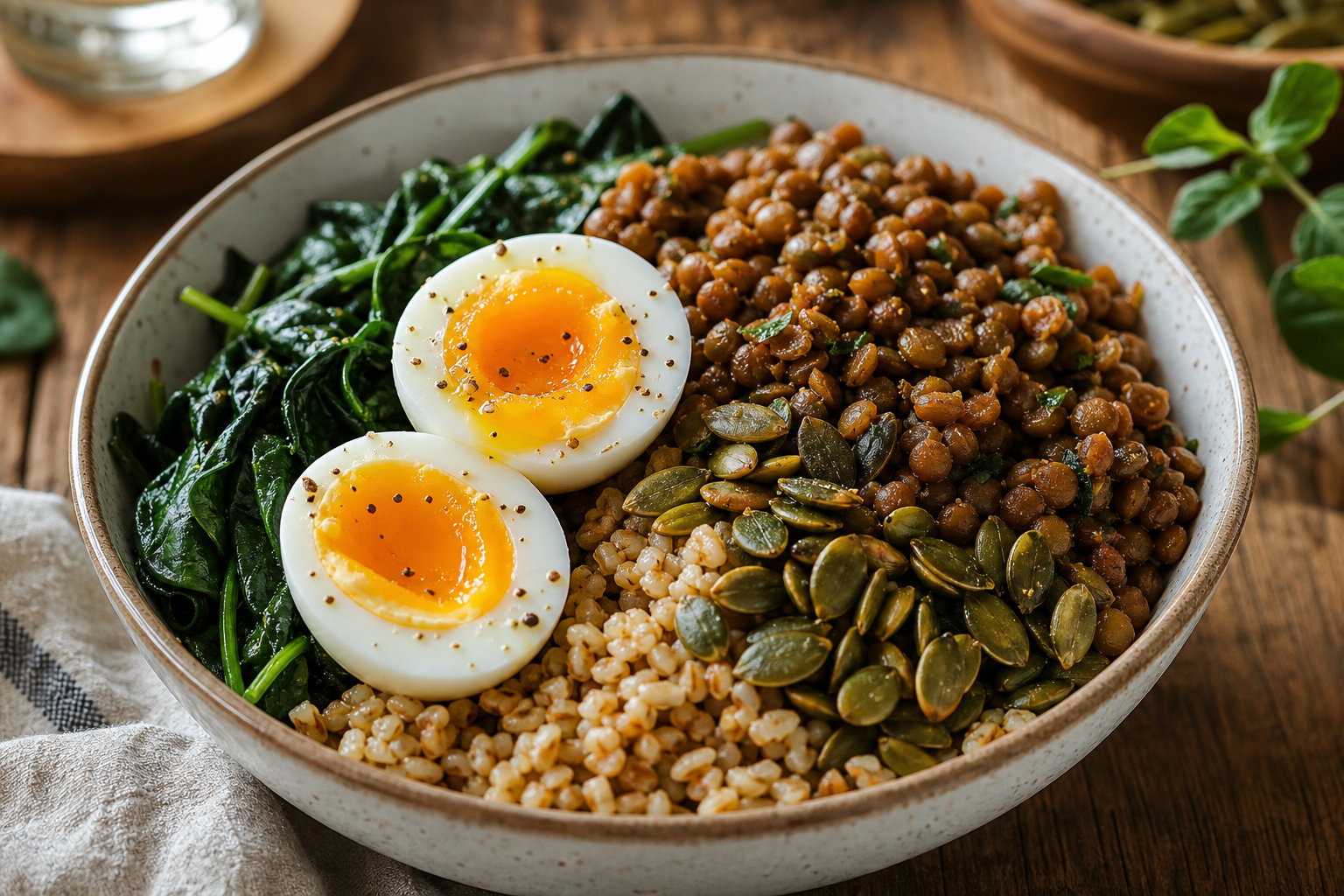
The good news is that you do not have to choke down liver to rescue your brain. Nature has provided incredible, everyday ingredients that are packed with the exact cofactors your nervous system is screaming for. Pasture-raised eggs are an absolute goldmine for vitamin B12, choline, and high-quality protein that stabilizes your blood sugar. Legumes—like earthy green lentils and tender chickpeas—are powerhouse sources of natural folate, iron, and slow-burning complex carbohydrates that keep your mood steady when the afternoon crash hits. Pair those with dark leafy greens like baby spinach, which deliver a hefty dose of folate and magnesium to soothe an overactive, jittery nervous system.
When you combine these ingredients into a warm, savory bowl, you are not just feeding your belly; you are providing the raw chemical building blocks your brain desperately needs to manufacture joy, calm, and clarity.
Before we dive into the recipe, I want to wear my responsible mama hat for just a moment. Food is an incredible, profound ally in postpartum recovery, but it is not a magic wand. If you are experiencing persistent sadness, terrifying intrusive thoughts, anxiety that steals your breath, or a crushing hopelessness that won't lift, please hear me: you did not cause this, you are not a bad mother, and you do not have to white-knuckle your way through it alone.
Nourishing meals can support your neurotransmitters and give your cells the fuel they need, but clinical postpartum mood disorders require real medical support. Please reach out to a trusted OB-GYN, midwife, primary care physician, or perinatal therapist. Asking for help is the bravest, most fiercely loving thing you can do for your family. You deserve to feel well, and your babies deserve to see their mama thriving, not just surviving.
A deeply comforting, liver-free, nutrient-dense bowl packed with B vitamins, folate, and iron to help support postpartum energy and mental clarity.
This is exactly the kind of warm, mood-supporting cooking I built into The Sitting Month® recovery course — done-for-you meal plans for the fourth trimester, so a new mom never has to figure it out at 3am.
Food is an incredible tool for supporting your neurotransmitters and energy levels, but it is never a substitute for medical care. If you are experiencing persistent sadness, anxiety, intrusive thoughts, or overwhelming despair after birth, please reach out to a doctor, midwife, or therapist. Postpartum depression is a medical condition that deserves professional support, kindness, and proper treatment.
Not at all! While beef liver is often touted as the ultimate postpartum superfood, I personally could not stomach the thought of eating it when I had five kids running around and zero sleep. You can easily get fantastic levels of b12 and folate from everyday, approachable foods like pasture-raised eggs, lentils, chickpeas, nutritional yeast, and dark leafy greens.
Right away, and honestly, even during pregnancy if you can manage it. Pregnancy and lactation drain your personal nutrient savings accounts to build a whole human brain and body. Postpartum replenishment is about refilling those tanks so your nervous system can handle the sheer chaos of motherhood.

Emily is a chef, mother of five and postpartum-recovery educator who revives the 2,000-year-old zuo yuezi ("sitting month") tradition for modern mothers. Her signature, food-first method helps women rebuild after birth and ease postpartum depression — and she now certifies doulas and midwives to cook it for their own clients.
The Sitting Month® recovery course delivers these mood-supporting foods in warm, done-for-you meal plans built for the postpartum brain.
See the recovery course